


Soothing Your Child’s Autonomic Nervous System
by Nichole Bomar
The autonomic nervous system (ANS) is a part of the peripheral nervous system that controls involuntary bodily functions such as heart rate, digestion, respiratory rate, and pupillary response. It operates automatically, without conscious effort, to regulate the body's internal environment and maintain homeostasis. The ANS is divided into two main branches: the sympathetic nervous system, which prepares the body for "fight or flight" responses, and the parasympathetic nervous system, which promotes "rest and digest" activities.

Trauma can have a significant impact on the autonomic nervous system (ANS), often causing it to become dysregulated. When a child experiences trauma, their ANS may become stuck in a state of heightened arousal (fight-or-flight) or, conversely, in a state of shutdown (freeze). As a result, children may display symptoms such as anxiety, difficulty calming down, irritability, or emotional numbness. Understanding this connection helps caregivers recognize the importance of supporting ANS regulation in children who have experienced trauma.
The autonomic nervous system (ANS) plays a crucial role in regulating a child's physiological responses to stress and relaxation. To help regulate a child's ANS, caregivers can use techniques such as deep breathing exercises, gentle physical activity, or mindfulness practices. Creating a calm and predictable environment, including routines and schedules, as well as offering comfort through soothing words and touch, can also support the child's ability to self-regulate. These strategies help balance the ANS, promoting emotional well-being and resilience.
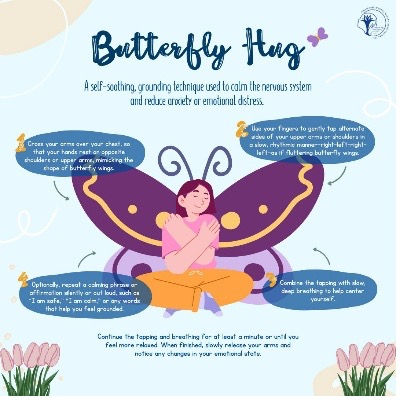
Here are a few regulating activities to try with your child:
Butterfly Breathing—Sit comfortably, gently rest your crossed arms on your chest with your hands on your shoulders, and slowly move your hands up and down as you breathe deeply, imitating the gentle movement of butterfly wings.

Box Breathing- Sit comfortably with one hand on chest and one hand on belly. Inhale through the diaphragm watching the hand on belly rise and fall while the hand on the chest remains still. Breathe in through the nose for a count of four, exhale through pursed lips for a count of four and repeat.
Simple Yoga Poses- Yoga uses muscle strength through stretching which allows the body to release tension and stress.
Large Body Movements/ Heavy Work- This includes sports that raise the heart rate such as basketball, football, and soccer. Exercises such as running, squats, jumping jacks, and climbing.

Bilateral Movement- Bilateral movements use both sides of the body together in a controlled, coordinated way. Examples are playing an instrument, tying shoes, jumping jacks, tossing the ball from one hand to the other, tearing paper, climbing, threading beads, using scissors, animal walks, dressing dolls, drumming, marching, and ruler drawings.
The Importance of a Calm and Regulated Autonomic Nervous System
A calm and regulated autonomic nervous system is vital for children’s emotional control, ability to learn, and overall healthy development. When the body’s internal environment is balanced, children are better able to manage their emotions and respond appropriately to challenges. This stable foundation supports not only emotional well-being but also cognitive growth and social relationships.
The Role of Co-Regulation
Parents and caregivers play a key role in supporting a child’s autonomic nervous system through co-regulation. By responding calmly and consistently, adults can help children transition from states of stress and anxiety to feelings of calm and control. This process involves guiding children through regulation strategies, modeling self-soothing behaviors, and providing a sense of safety and predictability.
Establishing Lifelong Healthy Habits
Consistently practicing regulation strategies each day helps children develop habits that promote resilience and self-regulation. Over time, these healthy routines become ingrained, equipping children with tools they can rely on throughout their lives. The daily application of these skills not only addresses immediate needs but also lays the groundwork for long-term emotional and developmental health.


Comments